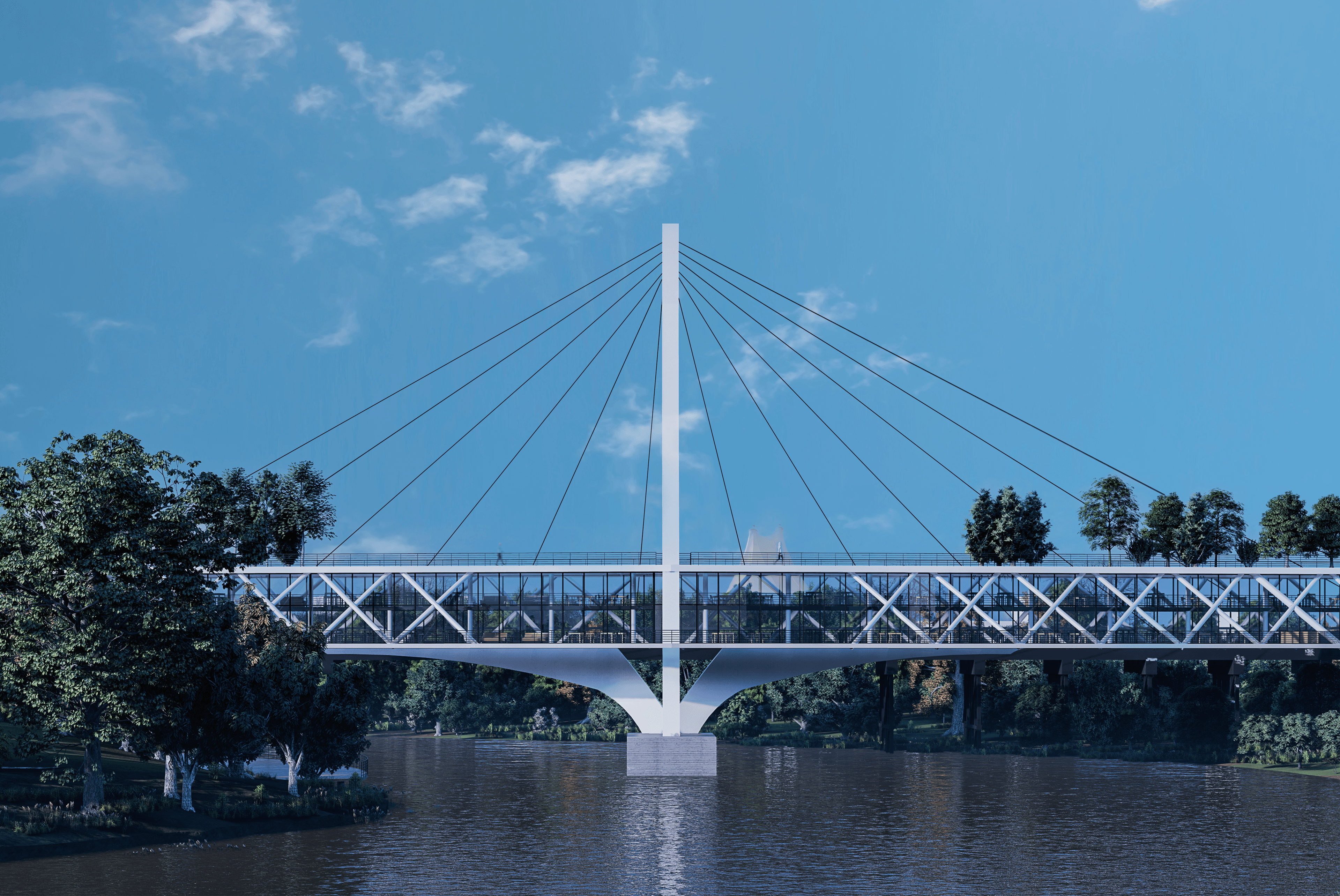
The Greenway Bridge is conceived as an infrastructural object that holds both movement and pause—simultaneously a crossing and a place. Situated between Fargo and Moorhead, the project addresses a site defined by division: seasonal flooding of the Red River and historically uncoordinated urban development on either bank. Rather than treating the bridge as a purely circulatory device, the project positions it as a civic center, giving form to a space of encounter while maintaining its role as connective infrastructure. Its alignment and scale are calibrated to reinforce each city’s long-term planning strategies, allowing the bridge to operate as a point of convergence rather than an isolated object.
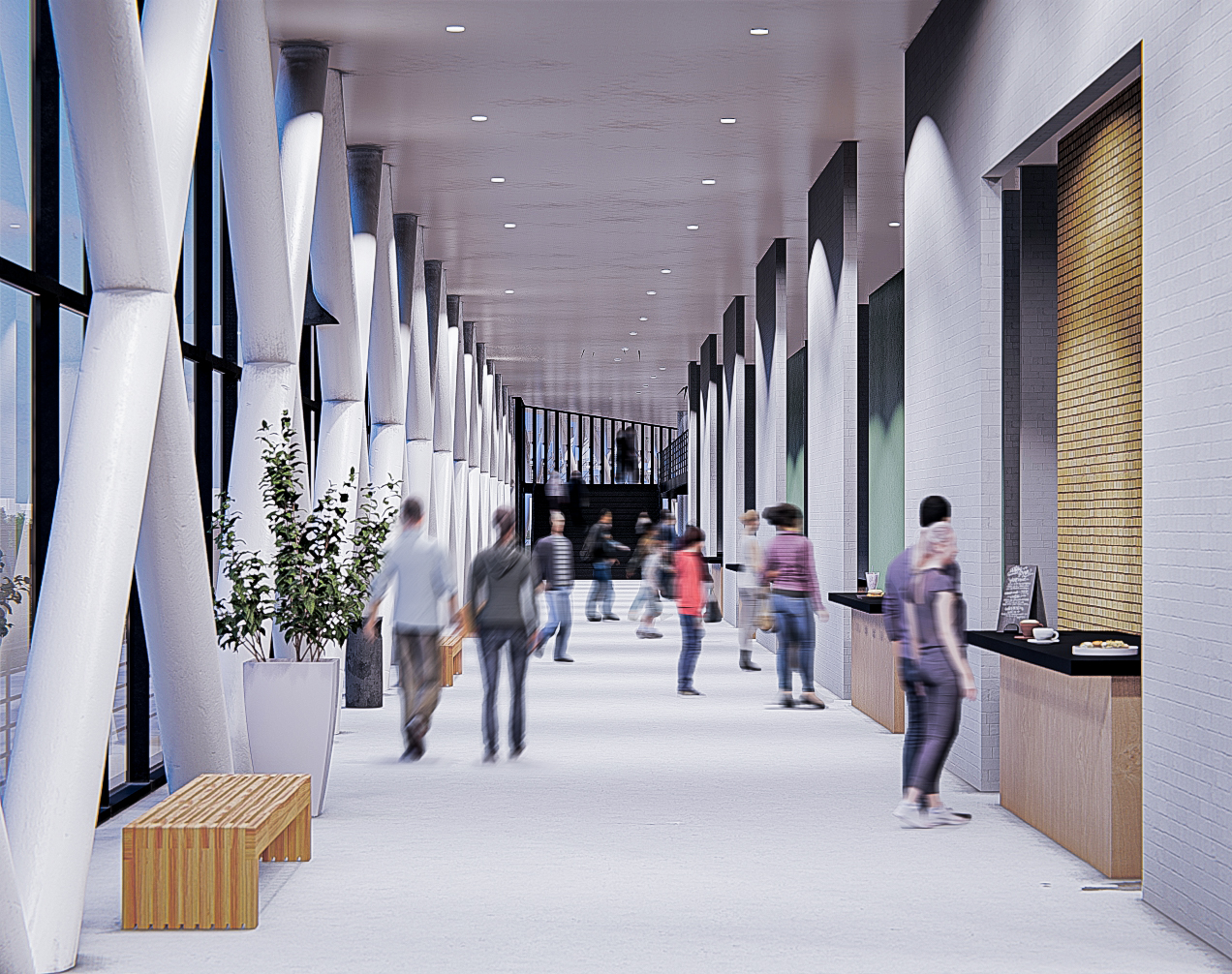
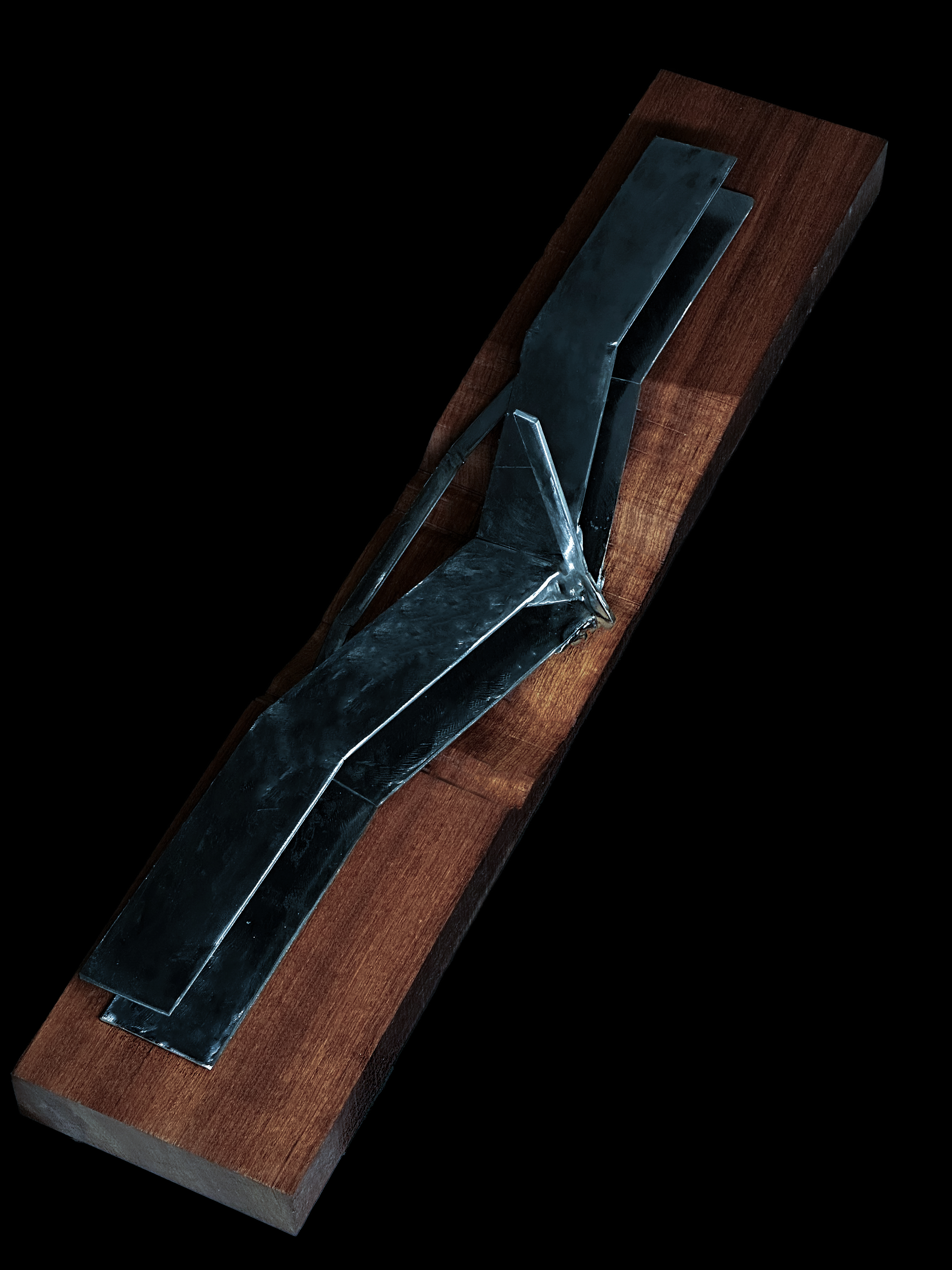
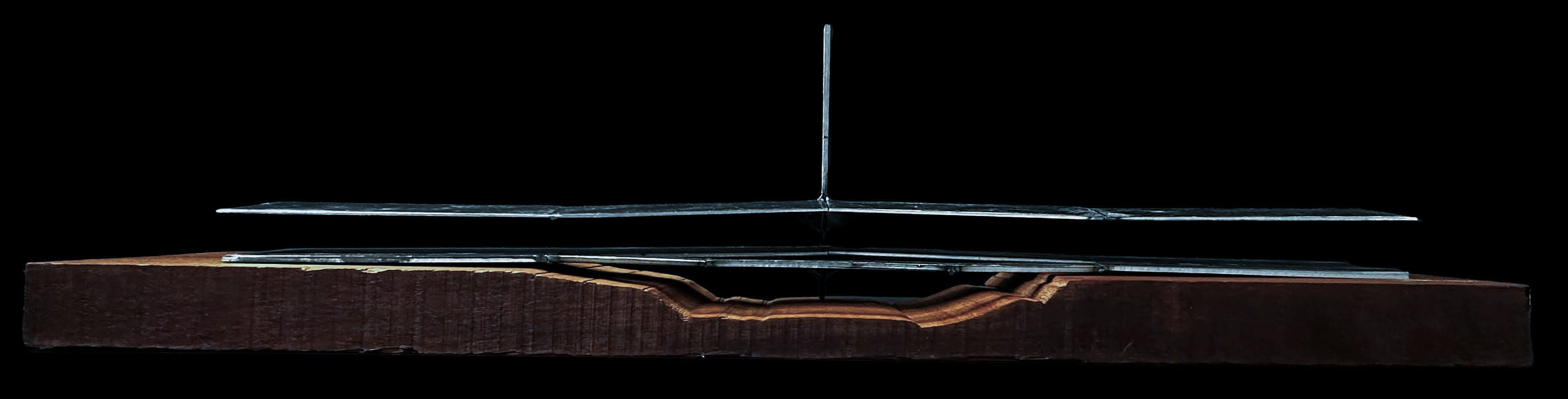
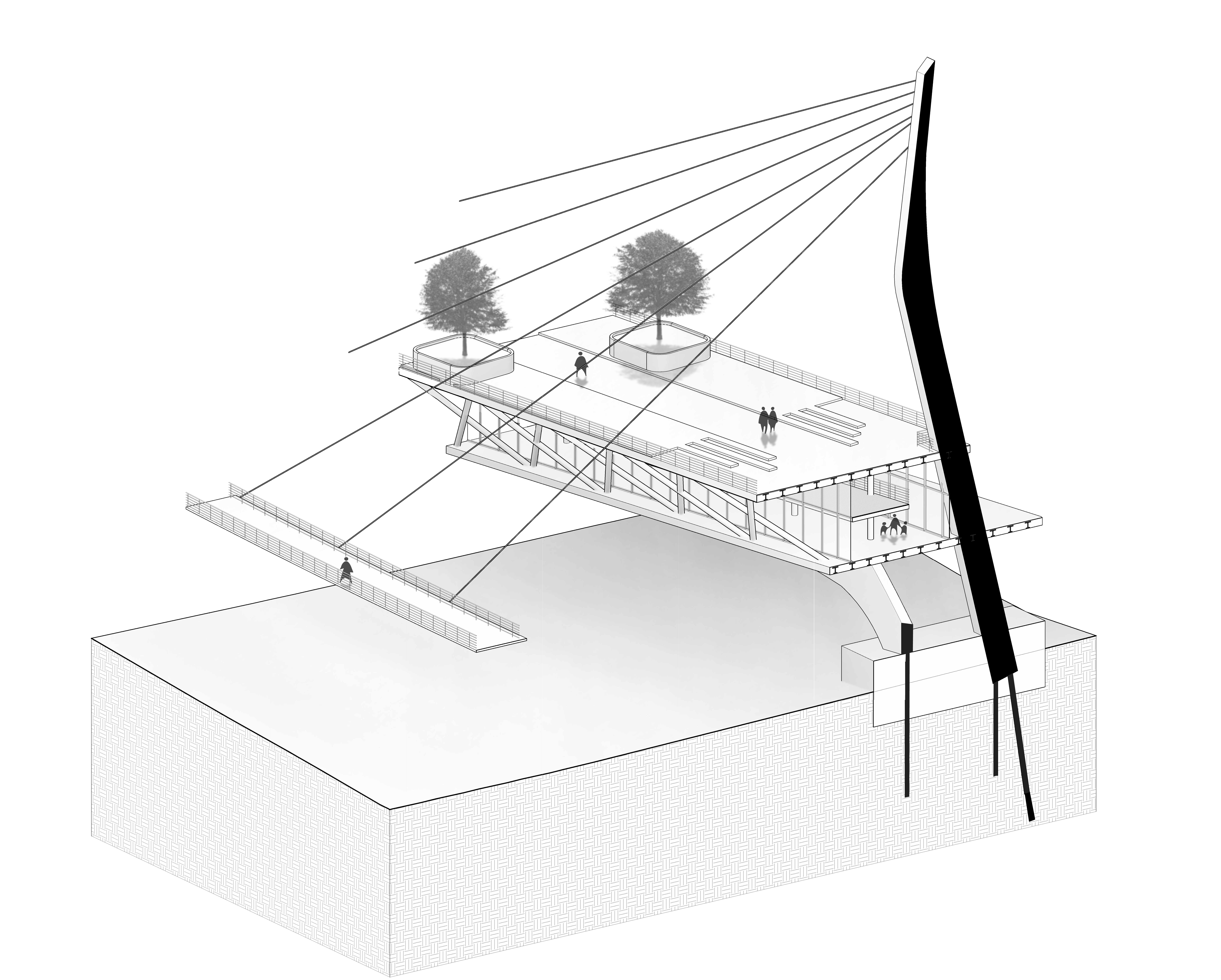
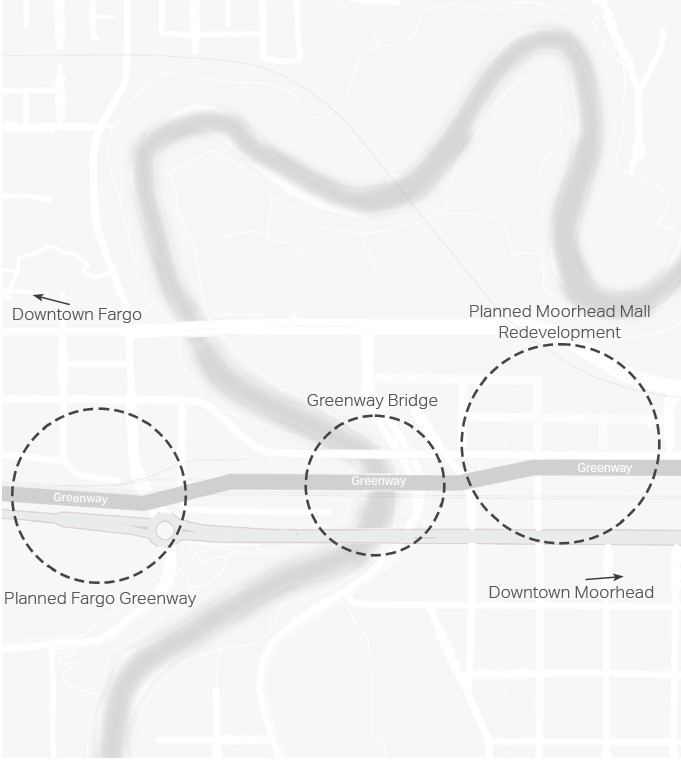
On the Fargo side, the project ties directly into a proposed greenway running along an existing railroad corridor, extending pedestrian and bicycle networks toward the city’s broader trail system. On the Moorhead side, it anticipates the demolition of the existing mall and the redevelopment of the downtown core, establishing a clear spatial and infrastructural link between future public spaces and the riverfront. The architectural form is defined by two primary moves: a pair of parallel planes that establish an interior zone for gathering while allowing uninterrupted circulation above, and a central structural support that anchors the project in the river while supporting an adjacent suspension bridge dedicated to bicycle traffic. Developed initially through physical steel models, the project emphasizes clear structural logic and restrained geometry, allowing form to facilitate changing patterns of use over time without being bound to a single program.
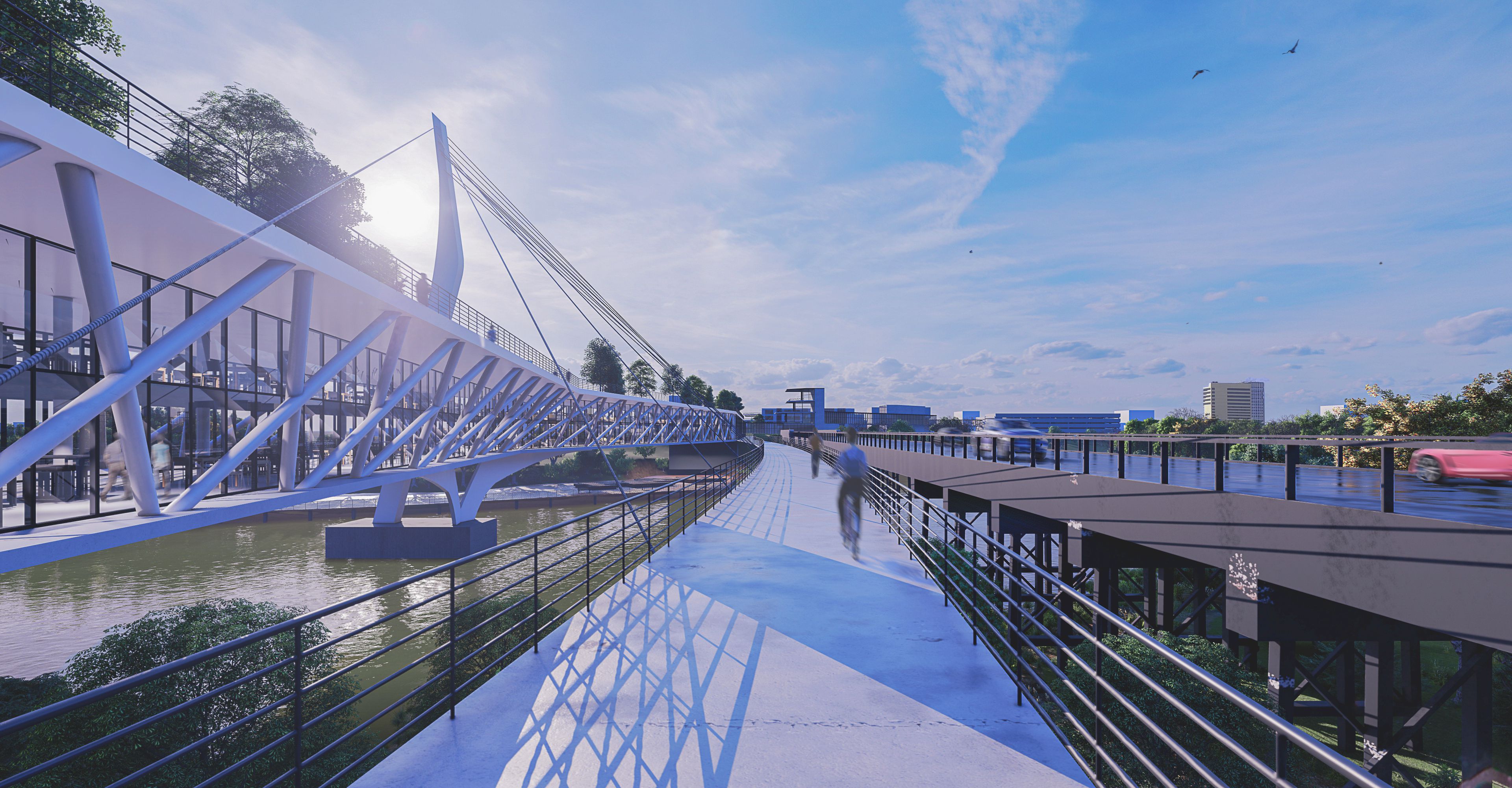
Extending the city plan's dedicated bike infrastructure.
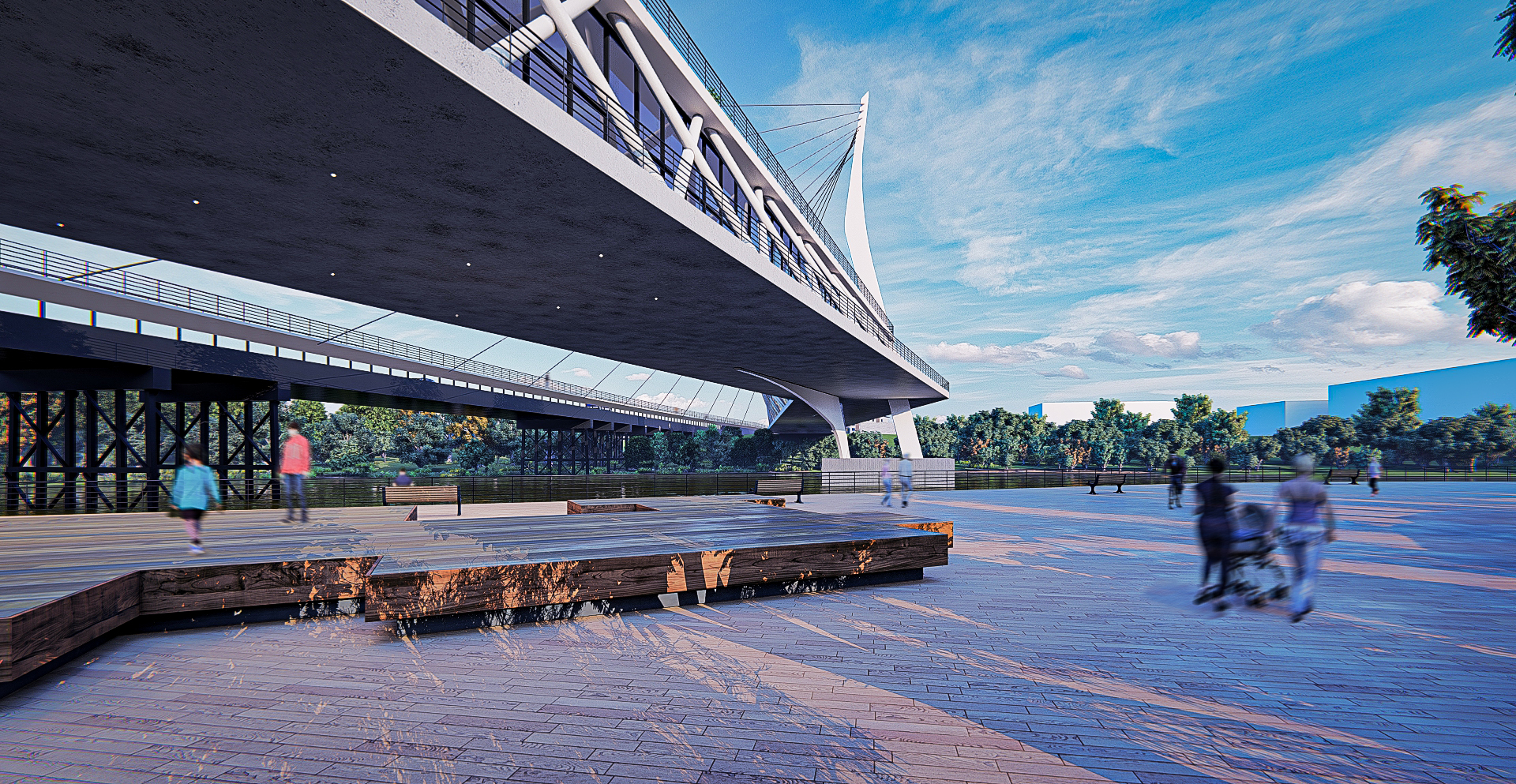
Redefining the regions relationship with the Red River with a river side plaza.
Integration of local resturaunts and shopping into the interior circulation.
Steel on Mahogany.
Steel on Mahogany.
Steel on Mahogany.
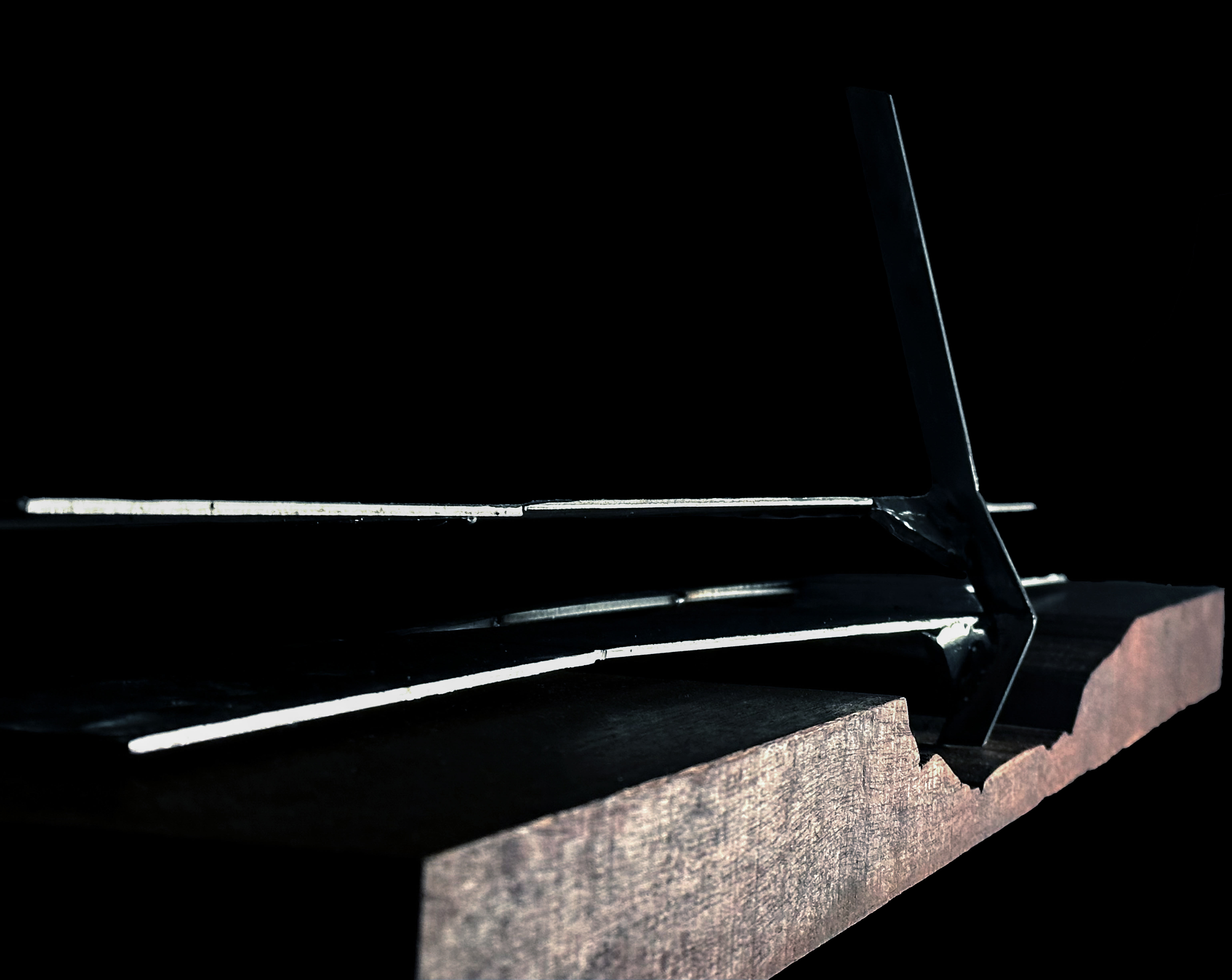
Illustrates the multiple circulation paths supported by an integrated steel assembly.
This project merges together the two previously un aligned city plans for their respective future developments.
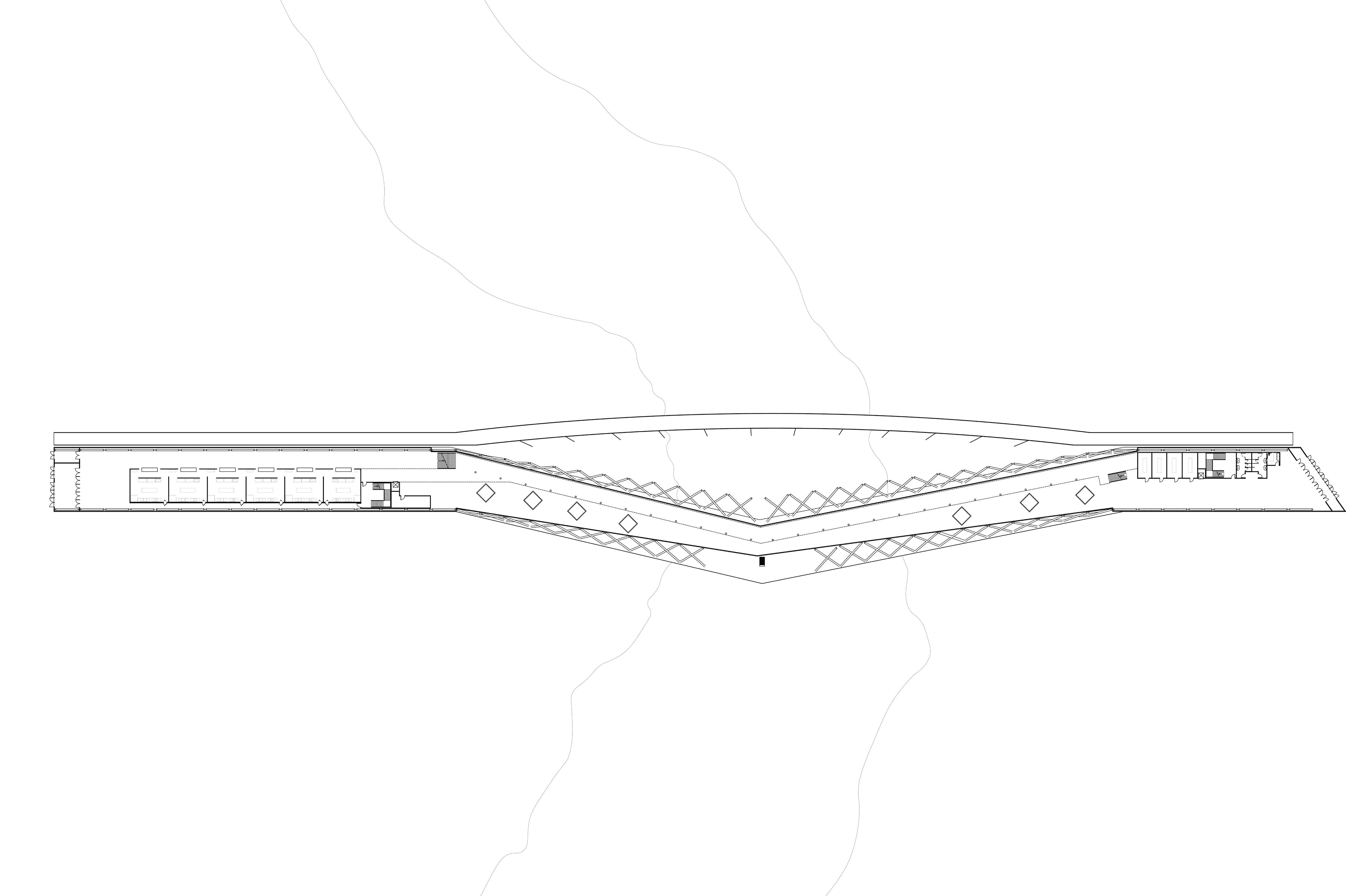
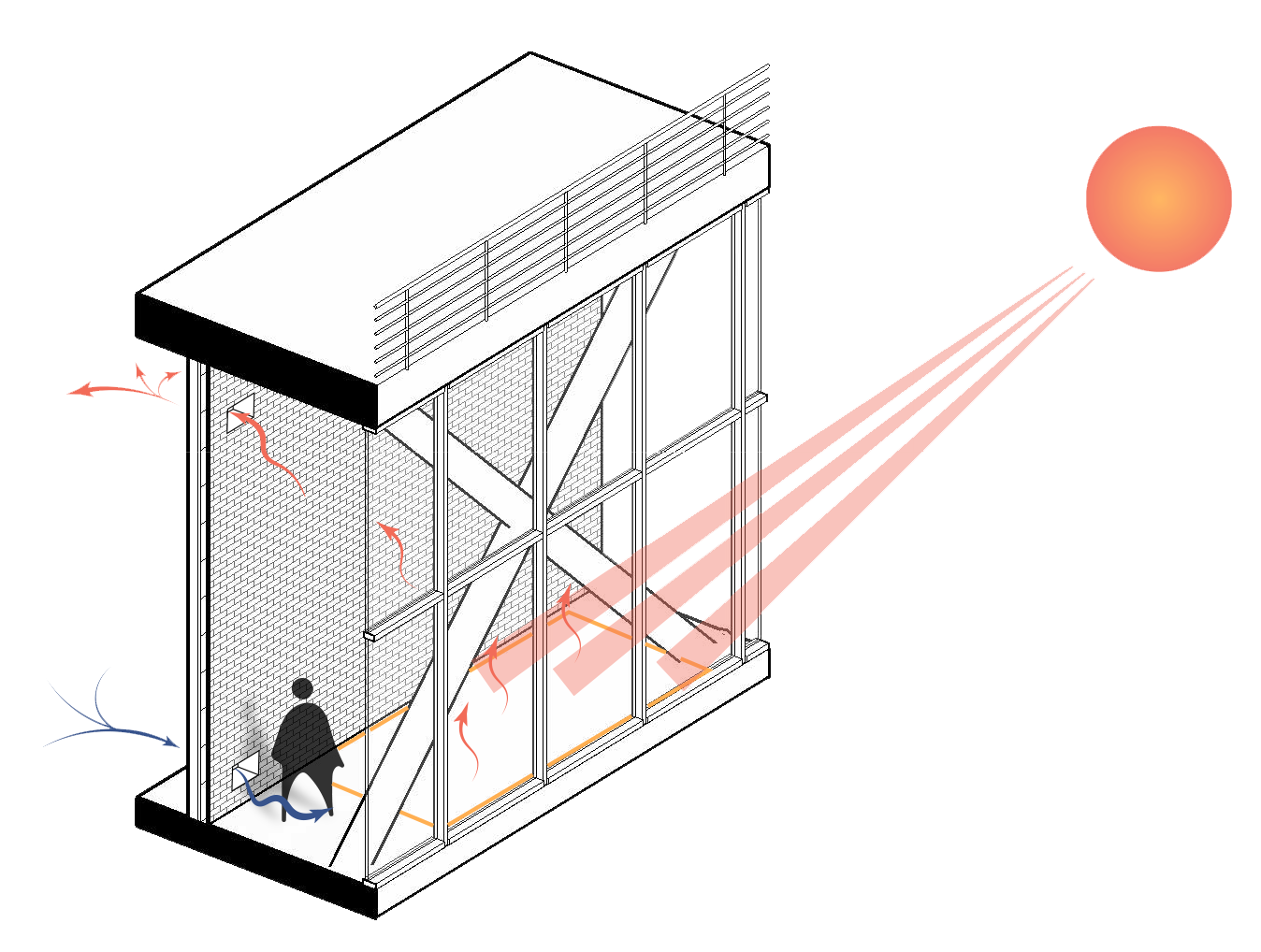
Consideration for natural lighting and passive heating in a cold climate.